Step 1: Make Sure You Are Safe
Before you worry about the keys, worry about yourself and anyone else involved. Safety always comes first.
If your car is parked on a busy street, near an interstate ramp, or in an area with poor visibility, move to a safe location away from traffic. Stand on the sidewalk, behind a barrier, or in a well-lit parking lot. Do not stand between parked cars or near moving traffic while you figure out your next move.
If you are locked out at night, stay in a visible area with good lighting. If the parking lot is empty or the area feels unsafe, consider walking to a nearby gas station, convenience store, or open business where you can wait safely while you call for help.
Important: If a child, elderly adult, or pet is locked inside the vehicle, especially in hot or cold weather, call 911 immediately. Do not wait. Emergency services are trained to respond quickly in these situations, and their priority is the safety of anyone inside the car. A locksmith can help with a lockout, but emergency responders are the right choice when there is any risk to life or health.
Step 2: Check for Simple Solutions First
Before assuming the worst, take thirty seconds to check for obvious answers.
Start by walking around the entire vehicle. Try every door handle. Sometimes the driver's door locks automatically, but the passenger door or rear hatch is still unlocked. This is more common than you might think.
Check if the trunk is open. Some vehicles have a separate trunk release that does not lock with the doors. If you can access the trunk, you might be able to reach into the cabin or fold down a rear seat.
If your car has a mobile app, check whether it has remote lock and unlock functionality. Many modern vehicles from Ford, Chevrolet, Toyota, Honda, and BMW allow you to unlock the doors through a smartphone application. This requires an active data connection, but it is worth checking before making any calls.
Look around the area. Did you leave a spare key in your wallet, purse, or jacket pocket? Do you have a magnetic key holder attached somewhere under the vehicle? Is there a family member or coworker nearby who might have a spare?
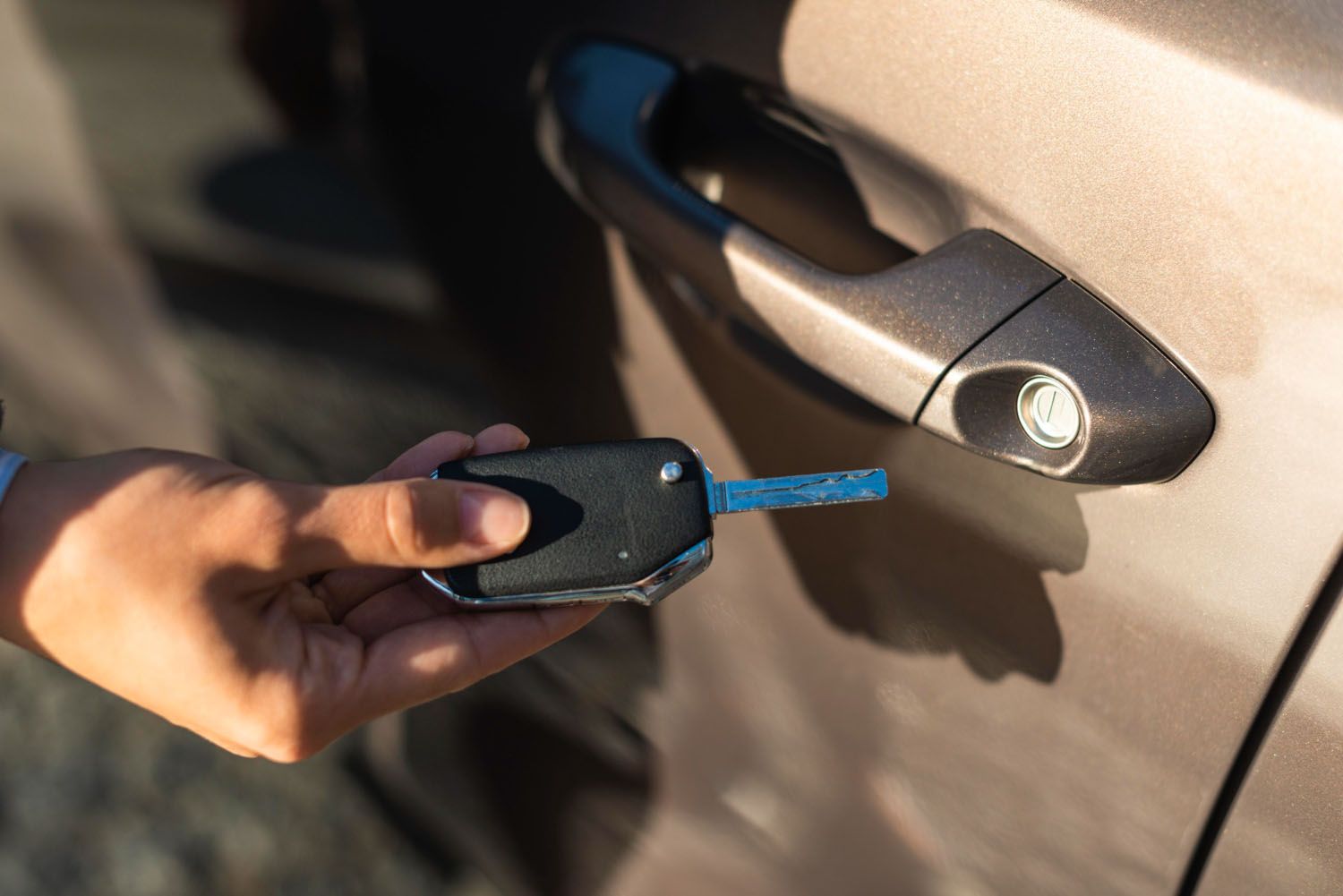
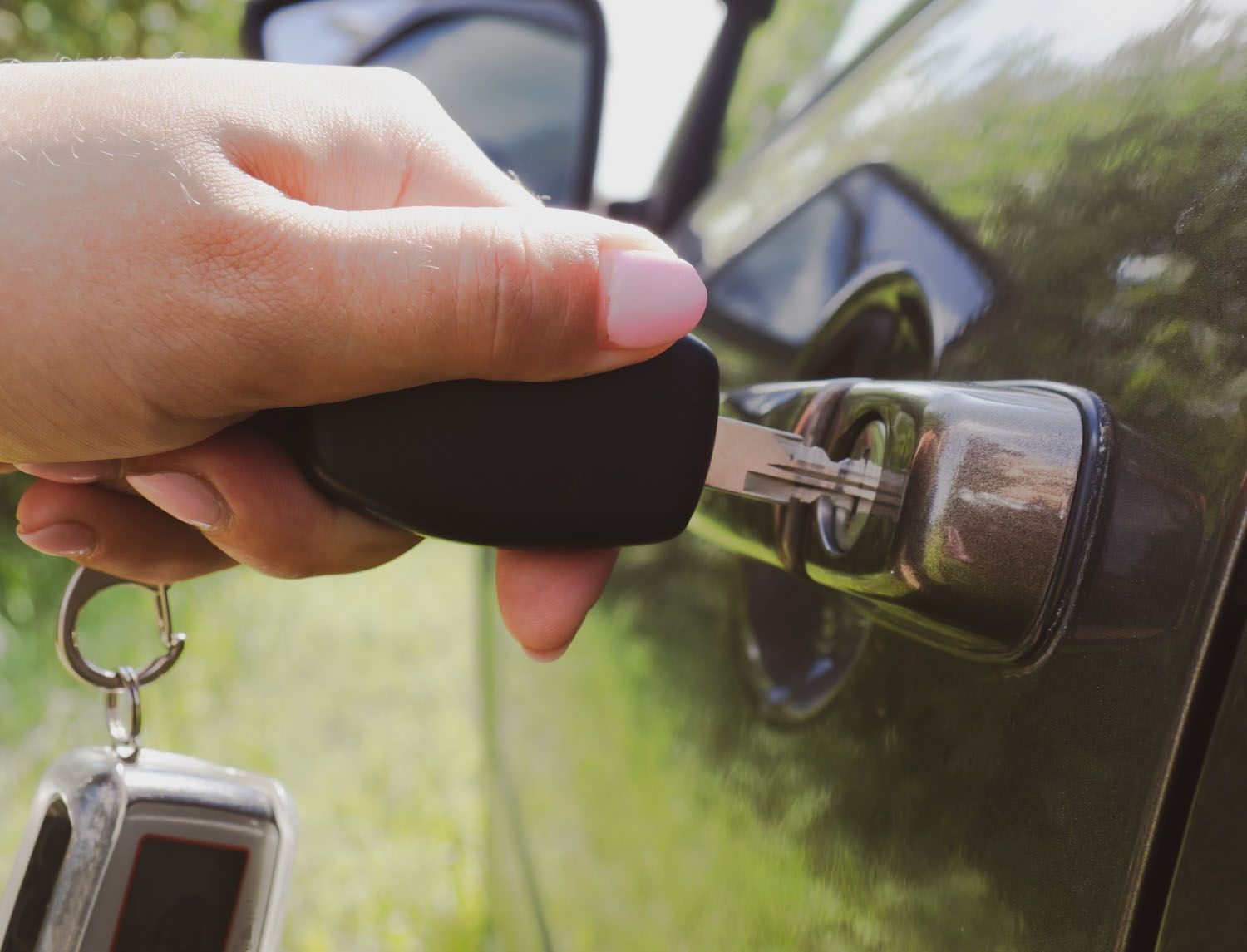
Also consider the key fob itself. If the fob battery is dead, the remote may not work, but the physical key hidden inside the fob might still open the door manually. Many key fobs have a small release button that slides out an emergency metal key blade. Check the owner's manual if you are unsure.
Step 3: Do Not Force the Door or Window
This is where many drivers make an expensive mistake. The urge to fix the problem immediately is strong, but the wrong tool or technique can turn a fifty-dollar lockout into a five-hundred-dollar repair.
Do not use coat hangers, slim jims, screwdrivers, or wedges unless you are a trained professional. These improvised tools can scratch the paint, bend the door frame, break the window seal, or damage the internal locking mechanism. Even if you manage to pop the lock, you may have loosened the weather stripping permanently, which leads to wind noise, water leaks, and rust over time.
Do not attempt to break the window. A side window may seem like a quick solution, but replacement glass costs hundreds of dollars, and broken glass leaves shards inside the car that are difficult to clean completely. In some vehicles, the side windows are laminated and extremely difficult to break safely.
Do not pull hard on the door handle or the top of the door frame. Modern vehicles have precise tolerances. Forcing the door can misalign the latch, damage the hinge, or trigger side-impact airbag sensors. These repairs are expensive and often unnecessary.
The safest and most cost-effective choice is to call a professional who has the right tools and training. Professional automotive locksmith in Indianapolis services use non-destructive entry techniques that preserve the condition of your vehicle.